
Kyotanba Radish, Nomura Family

The Future of Agriculture
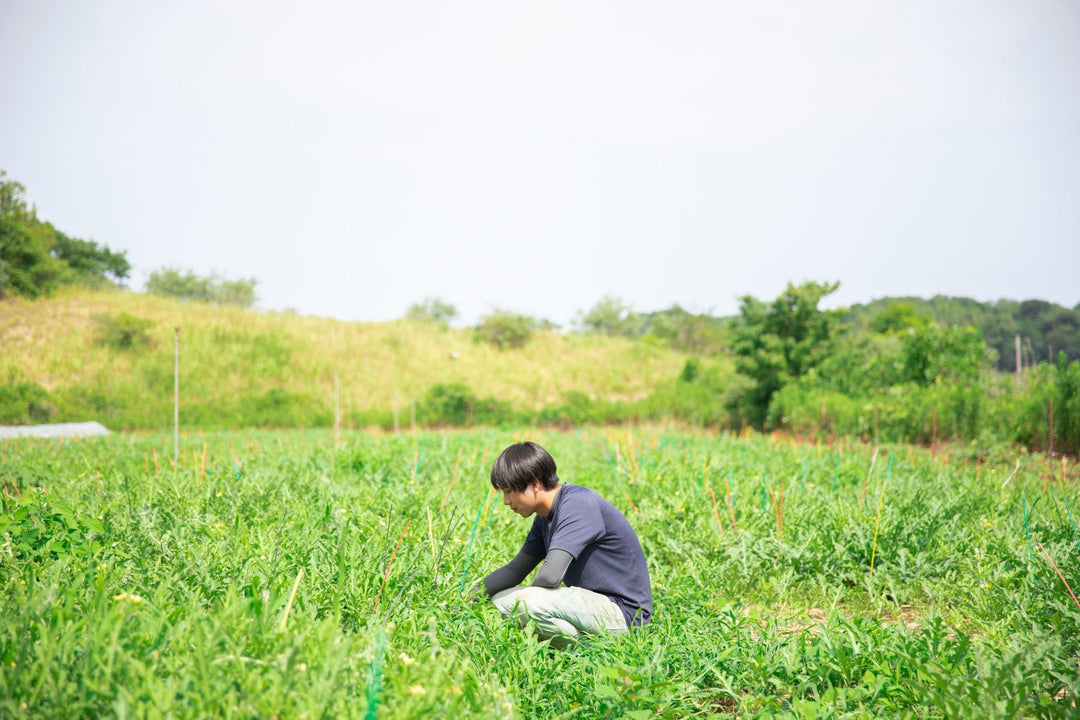
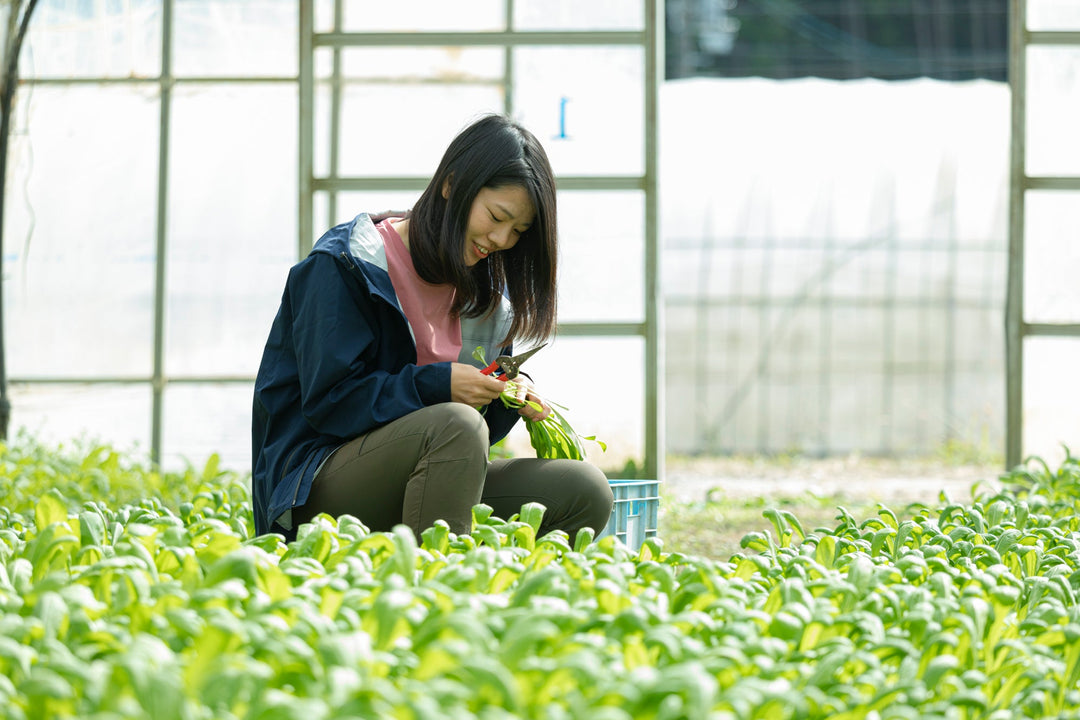
Thinking of our precious families. Thinking of the region where we were born and raised. Thinking about "the future of agriculture." We interviewed young farmers who, despite once leaving their hometowns for work or education, returned to farming in their 20s with various aspirations. Some are succeeding their grandfathers, becoming second-generation farmers. Others are women farmers upholding a family legacy.
We introduce young farmers from the northern Kyoto Prefecture area who are confronting traditional agricultural challenges such as sales channels, labor shortages, and farmland, all while embracing a modern farming lifestyle.

Kyotanba Radish
Nomura Family, Kyotanba (Kyotanba-cho, Funai-gun)
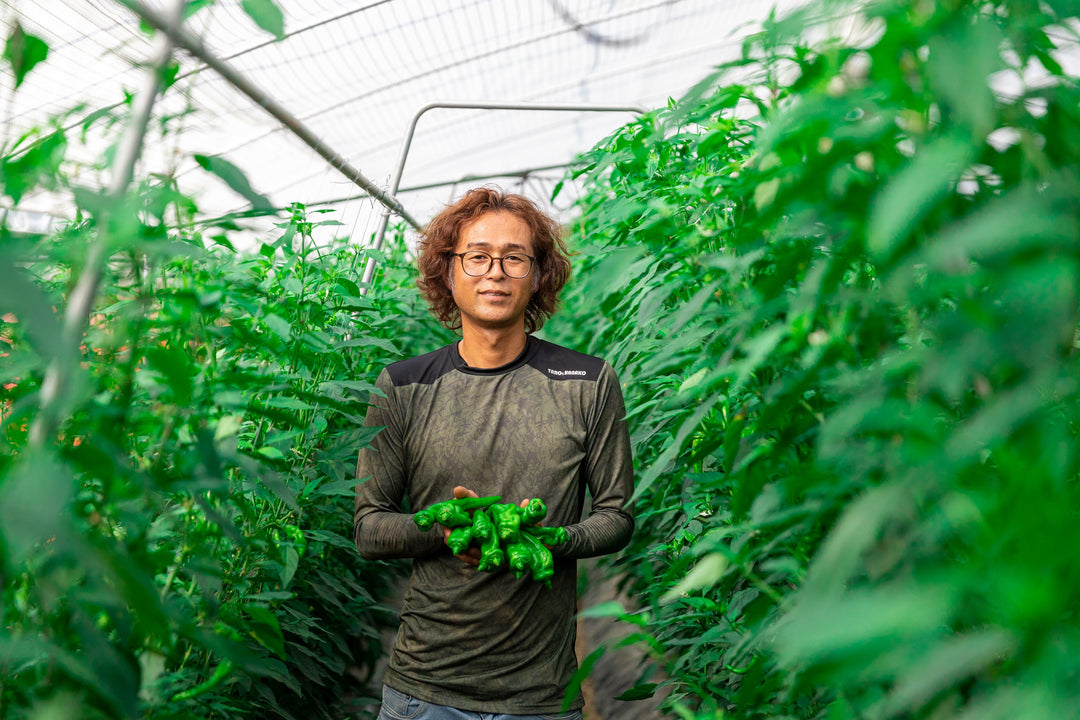
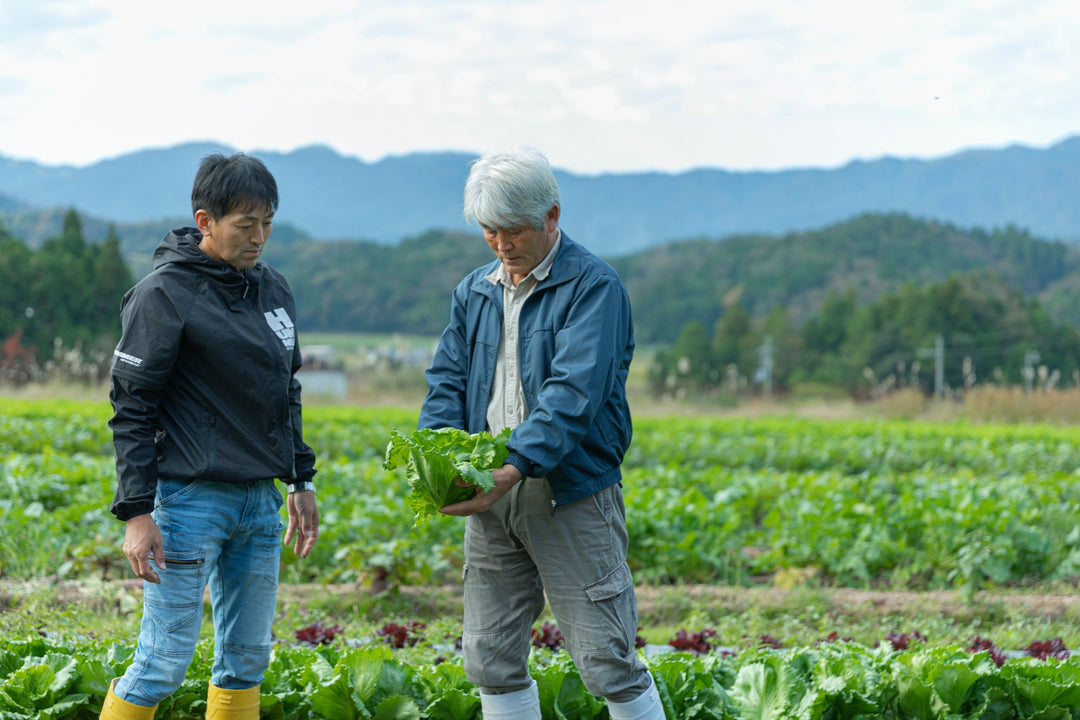
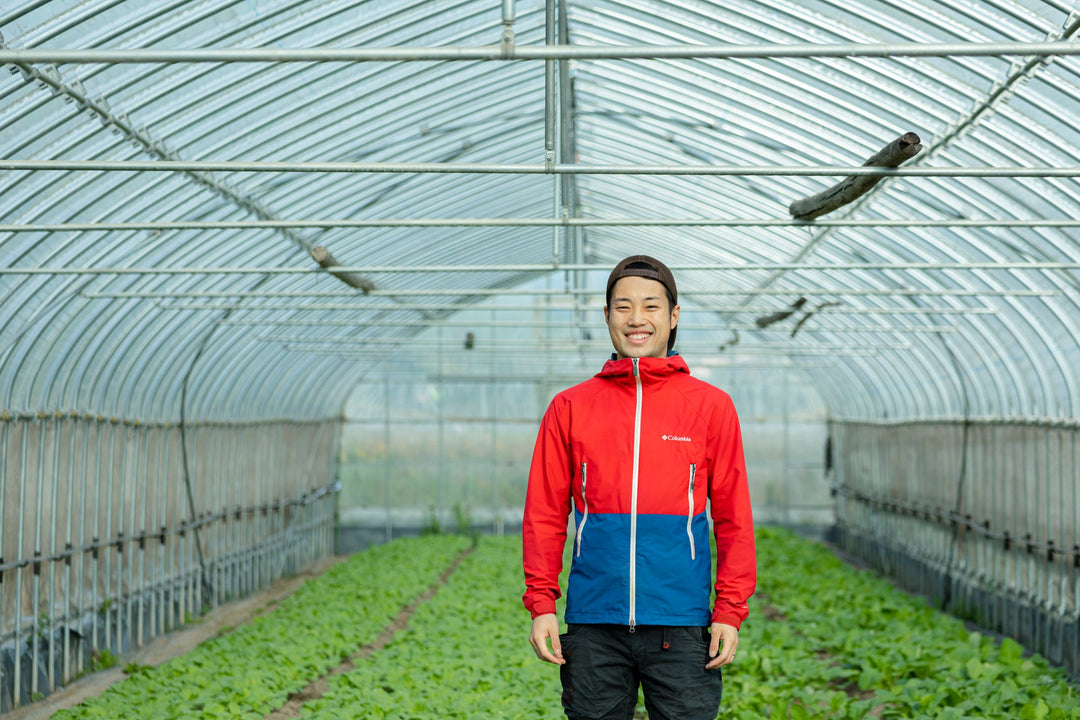
Koji Nomura (28), the representative, worked in sales for a food wholesale trading company in Tokyo and then in vegetable distribution in Kyoto before becoming independent in 2020, taking over the farm started by his grandfather, Tamotsu (87). He is making great strides as a leading young farmer in Kyotanba Town, a major production area for Kyoto vegetables and black soybeans, despite the advancing shortage of agricultural workers.
U-Turn to Kyotanba, a Town of Food
In the world of agriculture, where 65-year-olds are considered young, a farmer in their 20s is truly youthful. "Kyotanba is a town of food," says Koji Nomura, now 28, with a brilliant, sun-like smile, sharing his love for his hometown in a morning greenhouse where freshly sprouted radishes vigorously unfurl their leaves.

The reason Koji made a U-turn job change from Tokyo to Kyoto and returned to farming in his hometown of Kyotanba-cho is rooted in a bittersweet memory from high school, when his former elementary school was closed.
"It made me sad to see the school building being dismantled. Kyotanba, famous for black soybeans and Tamba chestnuts, is a town of food, but there were no successors to the farmers. I've had the desire to revitalize the region through agriculture since then."
Expanding Sales Channels from Kyoto to Kanto
He took a job in sales for a major food wholesale trading company in Tokyo with the aim of developing new sales channels for farmers who previously relied solely on agricultural cooperatives. "Even if you produce good products, if you don't have stable production capacity and a well-established distribution system, farmers can't make a living. And the production area itself can't survive either. If ambitious farmers collaborate to increase production capacity and improve distribution, sales routes can be expanded."
Today, his B2B clients include high-end department stores and supermarkets in Tokyo and Osaka, central markets and greengrocers in Kyoto City, roadside stations, and organic delivery companies, among others.

Agriculture Utilizing Social Media
Koji is also envisioning new forms of agriculture that only local farmers can achieve, utilizing social media for information exchange among farmers and recruiting part-timers.
"There are people who want to farm, but they can't find good farmland. On the other hand, it takes a lot of courage for communities to entrust their valuable farmland to strangers. So, I thought, as a local farmer, why not temporarily take custody of land from locals, train potential successors, and then create a system where they can become independent?"
Just over a year after inheriting the business from his grandfather Tamotsu, who had been a spinach farmer for nearly 20 years, this second-generation farmer has rapidly grown into a leading radish producer in Kyoto Prefecture, now cultivating 4 to 6 tons of radishes annually in seven greenhouses, a speed that seems to say he is a "re-awakened farmer."

Koji, as the second generation, is tackling fundamental issues such as sales channel development and training successors, while also utilizing modern tools like social media to revitalize agriculture and support Kyotanba, a town of food.
"I'm not aiming for agriculture where I'm just concerned with making a living for myself. I want to contribute to the community and society through agriculture, alongside my still-active grandfather and mothers on staff, demonstrating that agriculture can be a sustainable livelihood."
Bright Red Radishes
I also got to visit inside the plastic greenhouses where radishes are cultivated. The plump, bright red radishes, half-emerged and almost ready for harvest, looked as if they were about to rise from their earthy beds. The size of the radishes was noticeably larger than those usually seen in supermarkets.
Touching the soil where the radishes slept, it felt fluffy and moist. However, Koji said, "It used to be hard as a rock." "Years of continuous spinach cultivation with chemical fertilizers had compacted the soil."

From Hard to Fluffy Soil: Soil Improvement
Radish cultivation requires soft, moisture-retentive soil that allows the roots to grow downwards and the radishes to grow round without cracking. That's why they improved the soil.
"For compost, since there's a mushroom factory in town, we used spent mushroom substrate made from sawdust, which is common in organic farming these days." Combined with solar sterilization, they spread and mix local materials into the radish beds once a year.
Furthermore, while radishes prefer temperatures between 15 and 20°C, Kyotanba Town, a major producer of black soybeans, experiences significant temperature differences between day and night crucial for the black soybeans to accumulate sweetness, making temperature management essential.
As for the reputation of the radishes he lovingly cultivates? "Not only are they perfectly round and satisfyingly large, but people also love that they become even sweeter when cooked, yet remain juicy inside!" Koji replied with the brightest smile of the morning, filled with the sense of purpose that illuminates "the future of agriculture."
Photo by:Takashi Kuroyanagi
Writer:socko
Farmer:Nomura Family


Produced by OYAOYA
Related products
生産者の記事