
Season | Manganji pepper

Manbō Bell Peppers Like Models
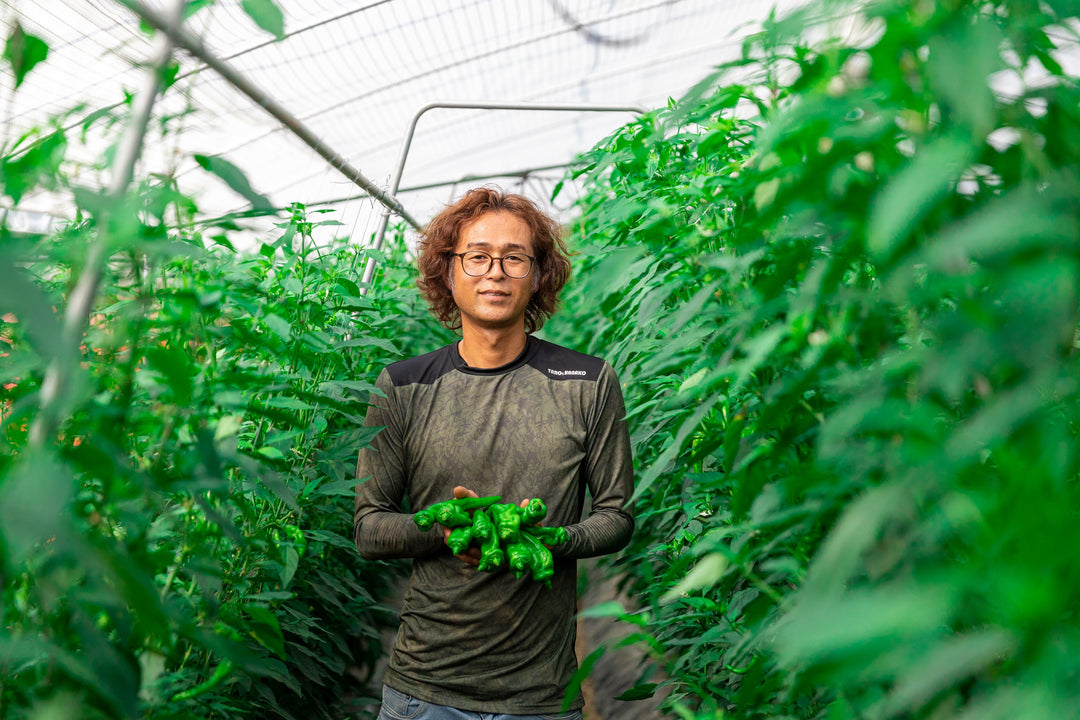
I was captivated by the Manbō bell peppers shown to me in a plastic greenhouse, where I was asked, "Aren't they sexy?" Their shoulders are gracefully constricted, and their vibrant green bodies, stretching elegantly, are taut and lustrous.
In addition to their feminine and glamorous appearance, they are tall, measuring 13 to 23 cm, earning them excellent and superior rankings. If we were to compare them to people, they would be models walking the runway at a fashion show. Occasionally, supermodel-class Manbō bell peppers, worthy of the spotlight at Paris Fashion Week, are said to appear. These are harvested only after exceeding 23 cm, having polished their flawless, miraculous bodies to an even greater shine.


The World's Largest Scale
This unusually large and beautiful individual is named "Kiwami" and is being commercialized as a premium Manbō bell pepper by [Season] in Miwa-cho, Fukuchiyama City. They ship 300 to 400 kg of Manbō bell peppers daily, and last year, they shipped 52 tons annually, making them the world's largest Manbō bell pepper grower.

Both greenhouse and open-field cultivation focus on the Manganji Ama-tō pepper, which originated in Maizuru City, the same hometown as the Manbō bell pepper, and was developed in the Taisho era. Although Manbō bell peppers are now a representative traditional vegetable of Kyoto, their production has expanded nationwide.
However, Manganji Ama-tō peppers are only produced in Maizuru City, Ayabe City, and certain areas of Fukuchiyama City, where [Season] is based. Although their history is relatively short among Kyoto vegetables, spanning only about 100 years, they can be considered true Kyoto vegetables.

"Man"gan Joju (Fulfillment of all wishes)
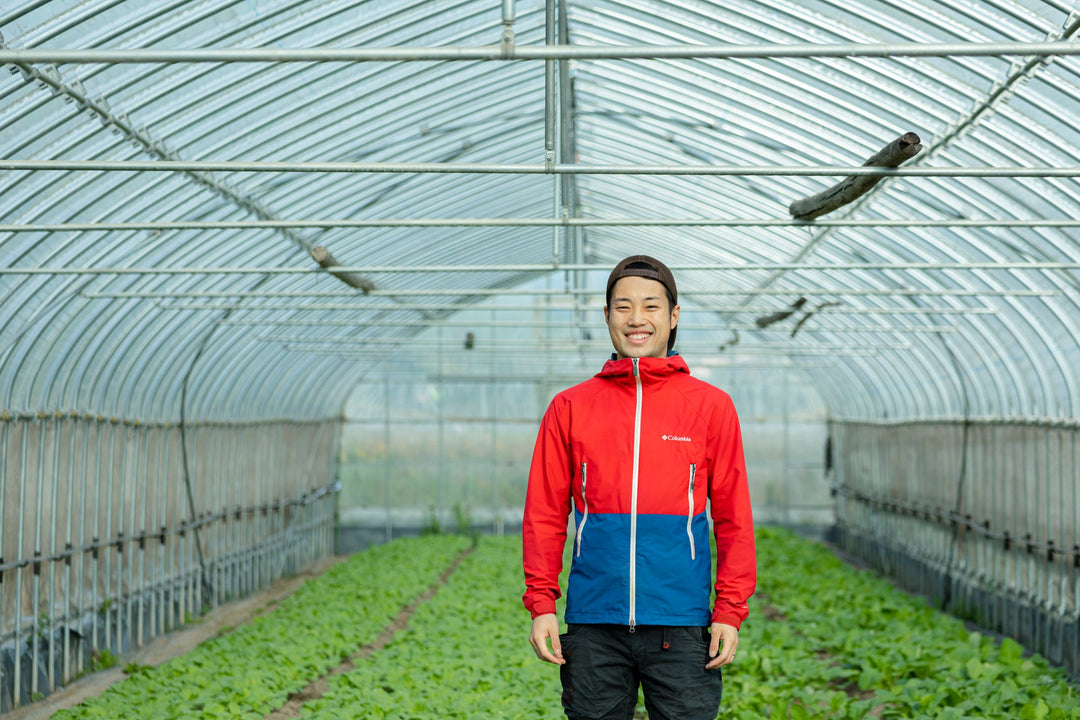
Mr. Seichi Kubo (42), representative of [Season], introduced the greenhouse-grown Manganji Ama-tō peppers, asking, "Aren't they sexy?" He wants to promote Kiwami as a "secretly grown Mangan Joju (fulfillment of all wishes) pepper" not only for consumption but also for its auspicious qualities. This is because Manbō bell peppers are so delicate that they can be damaged by merely shaking leaves and rustling, making them a challenge for farmers.
It is no exaggeration to say that the very existence of a Kiwami, which grows to over 23cm without a single blemish, escaping the watchful eyes of Mr. Kubo and his team and surpassing its harvesting period, is a miracle.

From their perspective, the purpose of Manbō bell peppers is to ripen, fall, sow seeds, and create the next generation.
Even though cultivation is difficult, missing the harvesting time would seem like a dilemma from a farmer's perspective. Yet, the Kiwami, which quietly wished to be overlooked and grew large and beautiful unnoticed, seems to possess a sacred power that compels us to forgive everything, and I, too, felt like offering a prayer.

Their Summer
I visited [Season] on an August morning. Although it was morning, the outside was hot, typical of summer, but the peppers in the greenhouse looked cool and comfortable.
"Manbō bell peppers are vulnerable to direct sunlight, so we use a 50% shading net to prevent the fruits from getting sunburned. Also, if the indoor and soil temperatures get too high, the plants can't absorb enough calcium, leading to rot. That's why we use shading nets and turn on the ventilation fans when the temperature exceeds 28℃."
If their leaves were hair, they would be sensitive-skinned, prone to irritation from even a gentle touch of wind-blown hair. Mr. Kubo and the [Season] staff also act as their dedicated hairstylists and makeup artists.

The Greenhouse is a Salon
"The spacing between plants is a comfortable 40 cm. We prune branches and leaves to prevent them from becoming too dense. If branches and leaves are too crowded, they not only rub against each other and get damaged, but also create shadows that can cause uneven color in the fruit or result in white fruits."
If you listen closely to the rustling leaves, shaking ever so slightly, you might hear their chattering as they relax for a moment in the dressing room before their grand show of harvest and shipment. And for Manbō bell peppers, water is essential for both skincare and body care.

Water is the source of beauty
"It is said that each Manbō bell pepper plant needs 6 liters of water per day, and in the past, we used to water them thoroughly in the morning. However, we began to wonder if this was really the best approach, and by sharing information with other growers in the region, we realized something important.
Maintaining a consistent soil moisture level is crucial. We now switch to automatic small, frequent irrigation every 40 minutes. If the soil moisture content is too high or too low, Manbō bell peppers experience stress, which can cause the fruits to bend severely or even prevent them from setting altogether."

Healthy and Sweet
Their bodyguards are also thorough, anticipating not only pests and bacteria but also any accidents that could hinder a supermodel like Kiwami.
"If branches break, they can't get enough water, and the fruit shrivels, so it's important to properly tie up the branches." What about the taste of the Manganji Ama-tō, carefully cultivated to be large, beautiful, and healthy from the inside?
Despite its astonishing size, it's never bland; its sweet umami overflows in your mouth, creating an exceptionally delicious experience. Although thick-fleshed might suggest a tough texture, it's juicy and soft, with a supple crunch no matter where you bite.

Their Existence
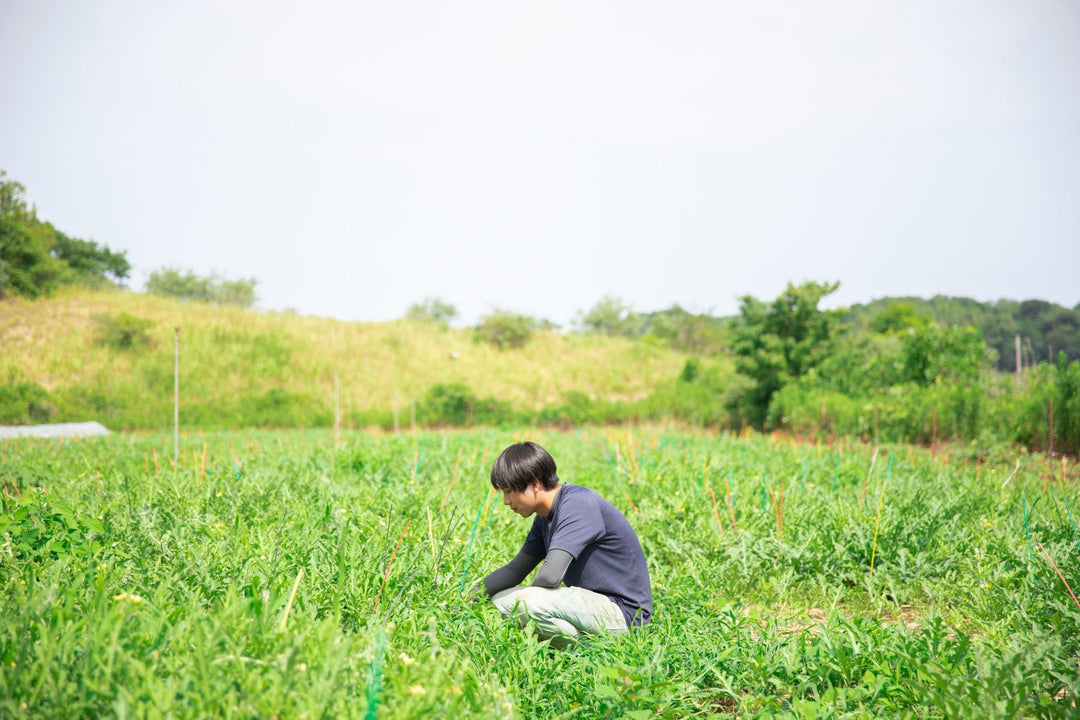
[Season] also focuses on stable supply and cultivates in open fields. I was just as captivated by the Manbō bell peppers shown to me in the open field next to the greenhouse as I was by those indoors. The open-field grown Manganji Ama-tō peppers have firm, masculine fruits.
With a strong impression of umami, texture, and aroma, they offer a different deliciousness not found in greenhouse-grown varieties, so it seemed interesting to compare them depending on the harvest season. "Multi-item, small-scale cultivation doesn't suit my personality. So, about 9 years ago, I decided to cultivate Manbō bell peppers on a large scale and gradually expanded the business."


Kubo continues, "We started our own services and crowdfunding last year to promote our farming, hoping people will think, 'Let's buy from those guys!'". Kubo's passion is deeply embedded in the [Season] website. By experiencing their dedication and savoring the taste with all your senses, you're sure to become a fan.
Photo by:Takashi Kuroyanagi
Writer:socko
Farmer:Season


Produced by OYAOYA
Related products
生産者の記事