
Taniguchi Farm | Mibuna

The Future of Agriculture
Thinking of precious family. Thinking of the region where I was born and raised. Thinking of "the future of agriculture."
I also spoke to farmers who, although they once left their hometown for work or school, returned to farming in their twenties with various thoughts in their hearts. Some as generational farmers taking over from their grandfathers. Others as female farmers preserving the family business for generations.
Here, we introduce young farmers in the northern Kyoto Prefecture area who are embracing modern farming styles while tackling long-standing issues in agriculture such as sales channels, labor shortages, and farmland.

Taniguchi Farm's Modern Return to Farming.
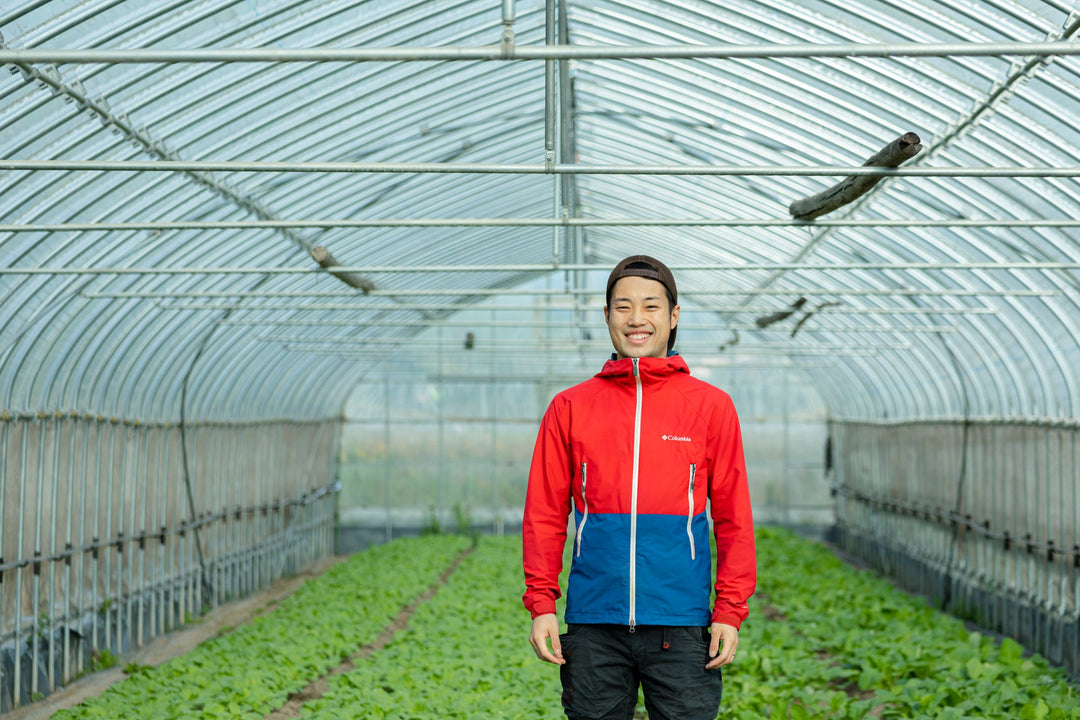
Taniguchi Farm (Hiyoshi-cho, Nantan City)
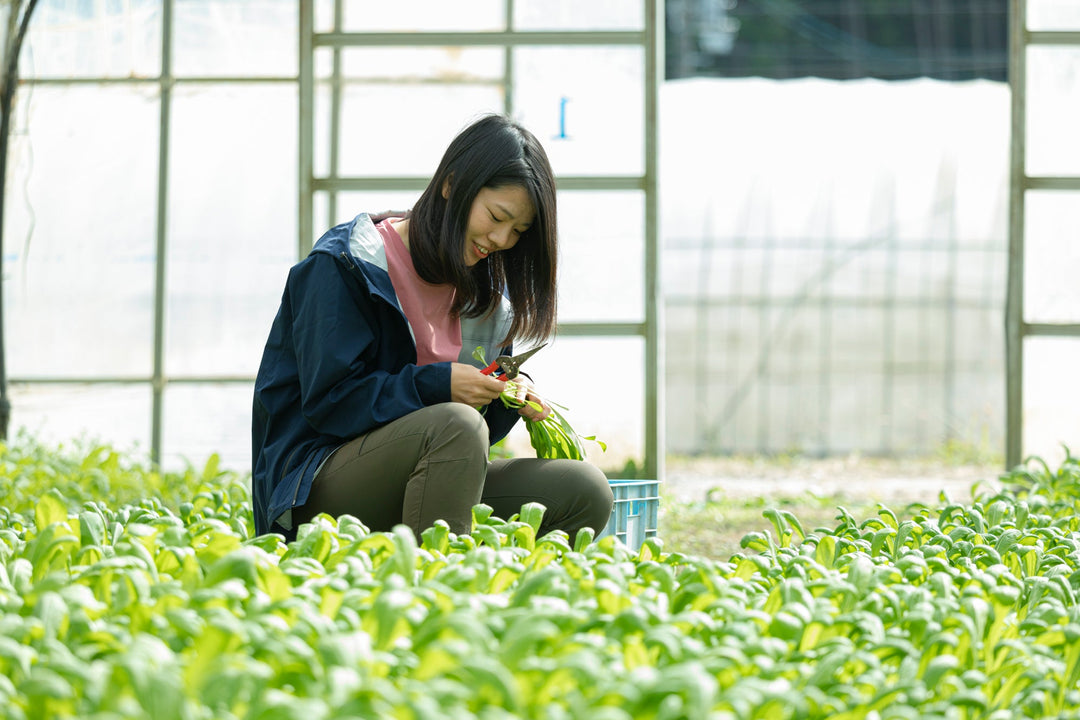
In Hiyoshi-cho, designated as a production area for the brand Kyoto vegetable, Kyo-mibu greens, this professional farm has been operating since the Edo period. In Hiyoshi-cho, there are only 15-16 producers of Kyo-mibu greens, and Taniguchi Farm is the only one operating as a three-generation family business. Hikari Taniguchi (27), who grew up watching her father work hard in agriculture, has become the 15th generation to uphold the family business.
Eco-Agriculture, from a Woman's Perspective.
We visited a young female full-time farmer in her twenties, which is still quite rare. Hikari Taniguchi joyfully explains, "While preserving the historic farm with my grandparents and parents, I've also become an independent sole proprietor, and starting this year, I'm growing vegetables organically and pesticide-free in my own greenhouse."
Originally, Hikari aimed to be a nurse. However, after graduating from a welfare university, she studied agricultural management at a school in Tokyo, then returned to her hometown (U-turn). She then took part in farming support courses at the Agricultural Improvement and Extension Center and cultivation workshops at JA, where she acquired cultivation techniques under her father's guidance.

"When my father took over farming, there were many part-time farmers and few full-time farmers. My older brother, who I thought would inherit the family business, went into a different field than agriculture. That's why I decided to return to farming before graduating from university, wanting to take over from my father who had worked hard as a full-time farmer."
Influenced by her father, who had been cultivating Kyo-mibu greens with less than half the usual amount of pesticides, adhering to organic principles, Hikari is committed to using organic fertilizers from the local community, such as cow manure and rice bran, instead of chemical fertilizers.


Hikari, who is also committed to pesticide-free farming, aims to produce safe and secure agricultural products. "I want to continue farming even after marriage and have children, so as an applicator, I want to avoid using pesticides as much as possible."
She not only has the pride of an independent full-time farmer but also considers the customer's perspective. She aims to cultivate vegetables of a quality that she herself would "want to buy."Along with her commitment to organic fertilizers and pesticide-free farming, her thoughtfulness in "making sure the taste is good and the appearance is beautiful. Seasonal vegetables often have similar colors, so I consider the color scheme when shipping them" seemed to be unique to a female farmer.

Cultivating Kyo-mibu Greens and Preserving Azuki Beans.
Mibu greens, a traditional Kyoto vegetable, are well-known for their crisp texture and spicy aroma in Kyoto pickles. Taniguchi Farm's Kyo-mibu greens, which can be enjoyed raw after washing, are beautifully vibrant yellow-green, soft, and exceptionally flavorful. They are popular for pickles and salads, and are said to be delicious whether boiled or grilled.

"Mibu greens don't really need much fertilizer. We apply organic fertilizer to the vinyl greenhouse once a year and grow them solely with the power of the plants." If too much nutrition is given, or if nitrogen is excessive, they turn black and spoil easily. Furthermore, Mibu greens are delicate and cannot be cultivated by machine. Therefore, the nature of the soil is also important.
"The soil base is fertile paddy field soil, designed to retain water without leakage. It's unsuitable for root vegetables, but ideal for Mibu greens. However, too much water is also detrimental." They grow Mibu greens with annual fertilization and minimal water, and pay careful attention to moisture levels, such as refraining from watering before harvest.

For generations, they grew rice. Their great-grandfather's generation cultivated leaf tobacco, and their grandfather's generation raised poultry, flowers, and vegetables. Over 30 years ago, their father's generation started the year-round cultivation of Kyo-mibu greens using organic fertilizers.
Initially, while also running a poultry farm, they gradually increased the number of vinyl greenhouses. Now, as full-time rice and vegetable farmers, and with Hikari's return to farming, the number of greenhouses cultivating Kyo-mibu greens has expanded to 24. Hikari says, "I want to protect the vacant farmland along with the family business." She is also considering how to utilize that land, stating with enthusiasm, "I plan to increase my own greenhouses from the current 3 to 8 in about two years."

Photo by:Takashi Kuroyanagi
Writer:socko
Farmer:Taniguchi Farm


Produced by OYAOYA
Related Products
生産者の記事