

Making Dried Vegetables on Your Condo Balcony! A Guide to a New Urban Habit
I left work at 6 PM and was walking through the restaurant district during dinner time.
"My paycheck came in, so I'll eat out tonight."
My small luxury is to have dinner at a slightly more expensive restaurant after payday.
"I've been eating a lot of fish lately, so I'll have meat today."
Thinking this, I headed to a creative meat restaurant in the bustling downtown area. Then, I was suddenly called out from behind. When I turned around, a familiar face was there. It was an old friend from university.
"Oh, it's been a while, hasn't it! How many years has it been?"
I rushed over to her without thinking.
"It really has, you were in Tokyo."
Her innocent smile was just as I remembered it. Looking past her, I instinctively bowed my head. Behind her was her gently smiling husband and a baby sleeping in a stroller.
Thus, after a ten-year reunion with my university friend, I was invited to her family's apartment out of her kindness.
"I took the plunge and bought this apartment," she said.
The living room, filled with the aroma of the coffee she made, was a clean room with warm wooden furniture.
"That's amazing! I wish I could live in such a nice apartment."
I looked at the family photos displayed on the wall. Then, she lowered her eyebrows slightly and continued.
"But you know, I feel like I have nothing to do."
When I tilted my head, she smiled weakly and continued.
"Every day I'm busy with childcare, and before I know it, it's night, isn't it? It feels like I've become Urashima Taro."
"I see," I nodded slightly, inferring her feelings.
"Why don't you try starting something new?"
I decided to recommend "making dried vegetables," which I had started, to her.
"Dried vegetables? Here? Can I do it?"
I pointed to the large, south-facing balcony with plenty of sunlight.
"There's such a suitable place there. You'll be fine!"
When making dried vegetables in apartments, it is often recommended to do so on a veranda or balcony. Dried vegetables, made with sufficient sunlight, have their natural sweetness and umami condensed, making them surprisingly delicious.
"Look, isn't that space perfect for making dried vegetables? You can do it even while raising children."
My friend nodded in agreement with my words and murmured, "I might try it."
I immediately introduced her to the serialized page my sister was writing, and then left my friend's house that day.
"Now I have another comrade!"
A sense of camaraderie was born, and the joy of being able to share the same pleasure with my friend made my steps on the way home surprisingly light.
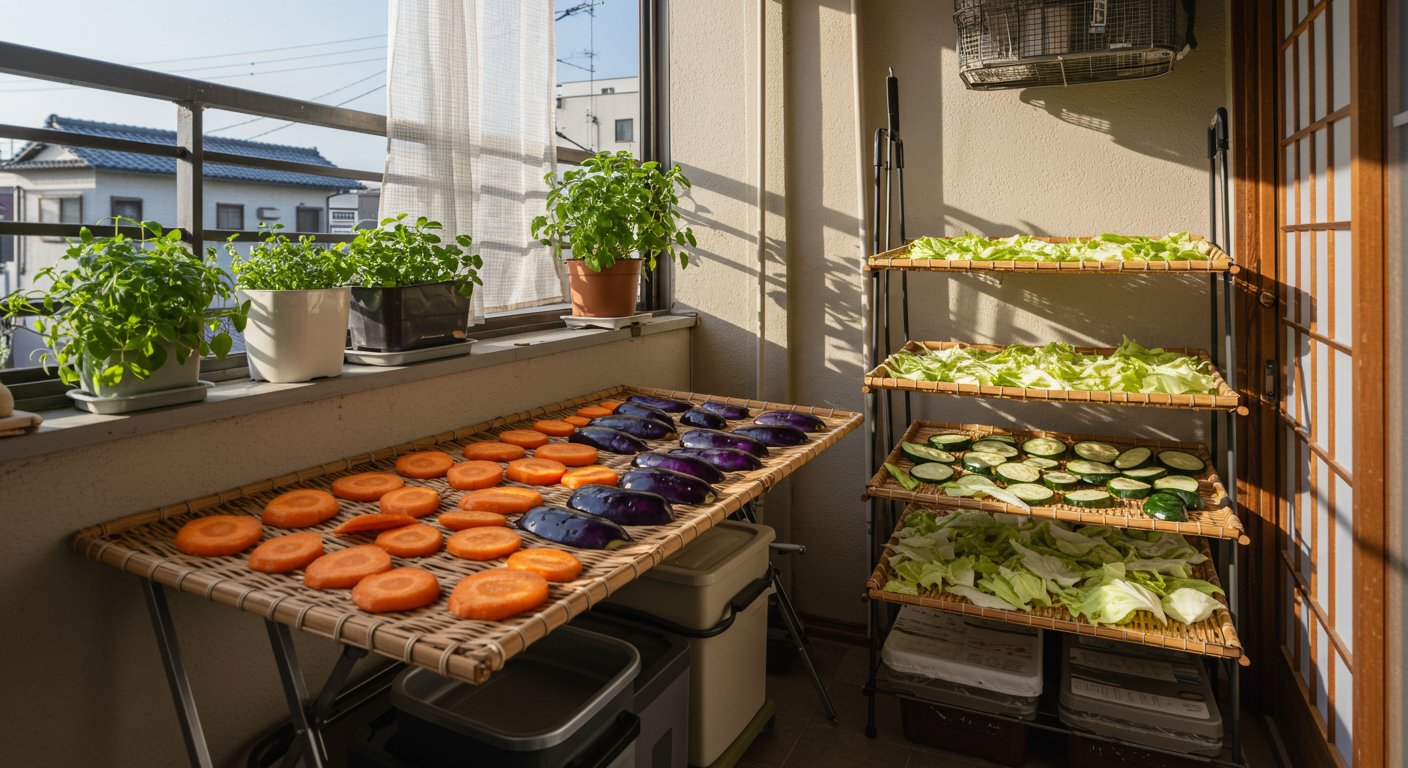 Even in city life, making dried vegetables allows you to feel the blessings of nature with a little ingenuity. This time, we will introduce how to easily start making dried vegetables on your apartment balcony.
Basics of Dried Vegetables and What You Need
Making dried vegetables is easier than you think. All you need are two steps: "cut" and "dry." You don't even need special tools.
First, the basic preparation is simply washing the vegetables with water. No seasoning is needed at all. Ordinary vegetables bought at the supermarket are sufficient, but seasonal vegetables will taste even better.
The tools needed for making dried vegetables are actually items most households already have. You can start if you have a colander or a net, and a well-ventilated place.
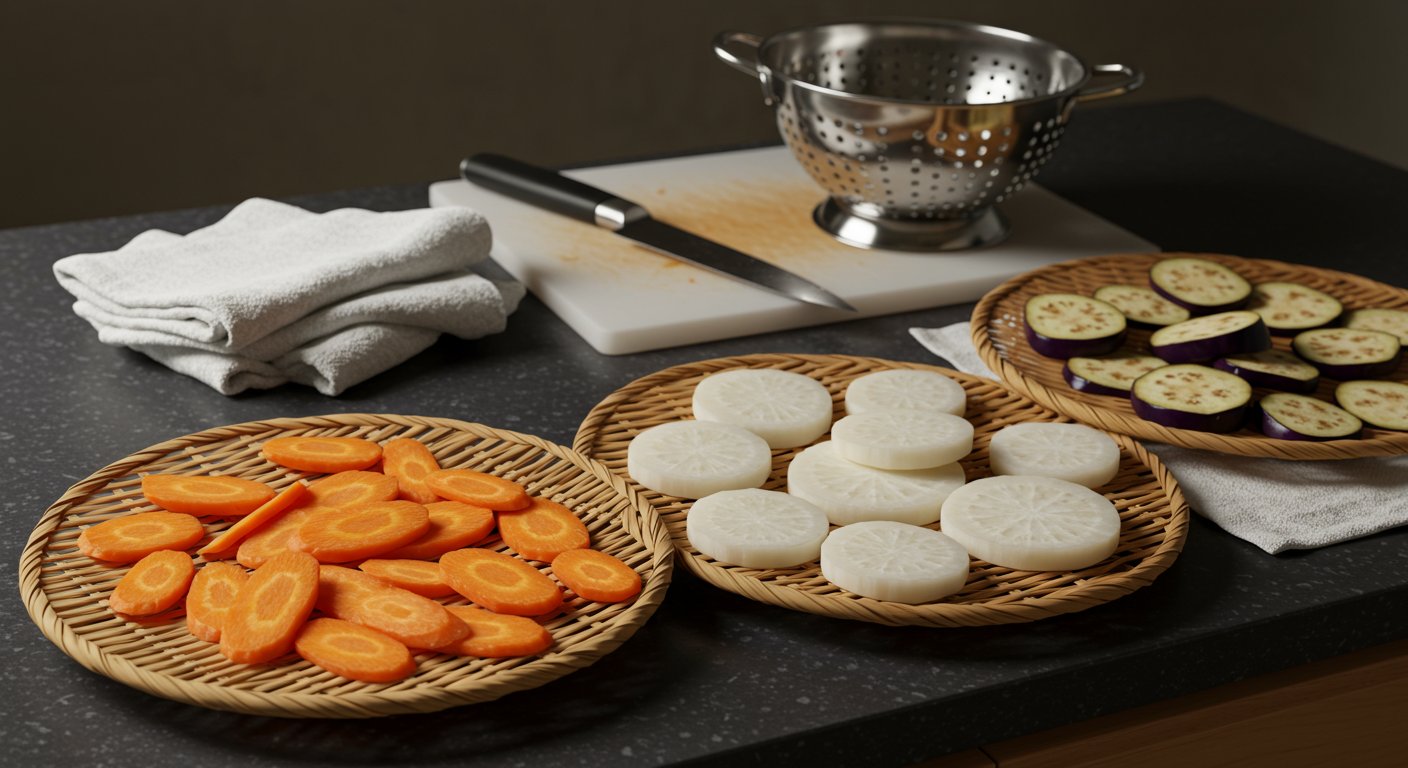 However, a drying basket is very convenient for protecting vegetables from insects and dirt. When using a drying basket, instead of arranging the vegetables directly, spread them on a colander or similar first before placing them in the basket. This makes them easier to remove and prevents them from sticking to the net.
On windy days, the colander itself might blow away, so it's necessary to take precautions such as placing a weight. The ideal drying spot is sunny and well-ventilated. However, it's okay if it doesn't get strong sunlight all day. Moderate sunlight and good ventilation are sufficient.
If you're unsure, it's best to choose a spot where laundry usually dries easily. The ideal time is said to be around 10 AM to 3 PM.
Tips for Making Dried Vegetables in an Apartment
Here are some tips for making dried vegetables specifically for apartments. Knowing how to dry efficiently in a limited space can be very helpful.
First, check your balcony environment. A well-ventilated spot with some sunlight is ideal. The amount of sunlight varies depending on the balcony's orientation, but even without direct sunlight, dried vegetables can be made sufficiently as long as there is good ventilation.
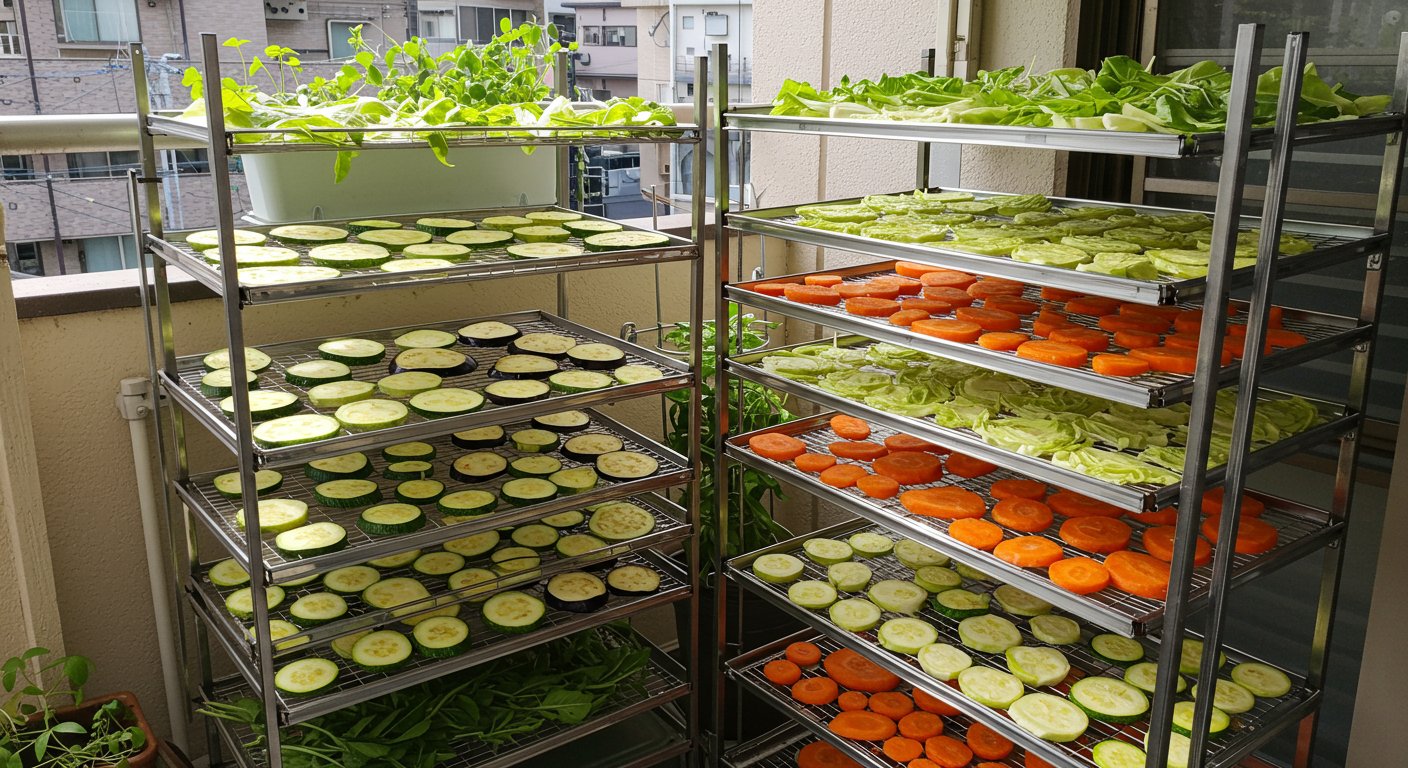 Precautions for drying vegetables in an apartment
Areas with poor airflow can lead to mold, so be careful. Since mold can grow due to temperature changes between morning and night, if you're drying for several days, bring them indoors at night. To effectively use limited space, drying them vertically is key! By using a hanging drying basket, you can utilize vertical space as well.
If you absolutely can't dry them outside, another option is to dry them by a window. If the window is sunny, you can dry them sufficiently indoors.
Don't forget crow countermeasures! Especially in city apartments, crows can fly in. It's safe to check on them occasionally while they're drying or cover them with a net.
If there are restrictions on outdoor drying in your apartment's regulations, it's better to check with the management association before starting. In most cases, drying food is not an issue, but it's good to confirm just in case. In particular, when drying strongly scented vegetables like garlic, be careful as it may bother neighbors.
Vegetables Suitable for Drying and Drying Methods
You might wonder if all vegetables can be dried, but in fact, most vegetables transform into something delicious when dried. Especially recommended for beginners are daikon radish, carrots, pumpkins, eggplants, zucchini, and cabbage. These dry relatively quickly, and there are many ways to use them in cooking after drying.
The cutting method and drying time vary depending on the vegetable. For example, daikon radish and carrots dry faster if cut thinly, while pumpkin is fine even if cut a little thicker. Whole outer cabbage leaves, when dried, are very useful as an ingredient in soups or miso soup after drying.
Click here for recommended vegetables for drying
Experiencing Small Riches by Making Dried Vegetables
Making dried vegetables offers enjoyment beyond mere food preservation. In urban life, you can feel a small connection with nature. Also, every time I see the vegetables drying on the balcony, I feel a sense of calm. It's wonderful to find such small happiness amidst a busy daily life.
When I first tried drying cabbage outer leaves myself, I was amazed by the transformation. The outer leaves, which are often discarded, became sweeter when dried, and they were exquisite when added to soup.
Why don't you start making dried vegetables on your apartment balcony too? It's easier than you think, and you're sure to discover something new. Turning "wasteful" into "delicious." From such a small step, your life might become even richer.
Related Products
Learn More About Dried Vegetables
そのほかの乾燥野菜ブログ
View all