

The Ultimate Guide to Preventing Mold on Dried Vegetables! 6 Professional Storage Techniques
"Argh! This is enough!" I glared at the visitor who was intently observing my movements from the balcony.
"I really need to buy a bigger, proper vegetable drying net..."
The obstacle to my sun-dried vegetable making wasn't just bad weather. I couldn't forget the presence of wild birds and insects targeting my vegetables. The town I live in is located a little way into the mountains from the city center. I fell in love with the clear air and lack of traffic, which is why I chose this property.
"What an unexpected pitfall," I thought, looking up at the birds soaring in the sky, then glancing at a notification on my phone. It was from my sister. It was a joyful message reporting that the access count for her serialized articles was steadily rising. I immediately called my sister.
"Sis? What's wrong? Huh? Oh, I see, well, that's what I'd expect."
My sister's lively tone suggested she had already anticipated my struggle with wildlife.
Following my sister's advice, I immediately bought a new net for drying vegetables, and the problem was resolved. However, at the same time, I received this advice from my sister:
"You know, you might be worried about wild birds and insects, but they're not the only natural enemies. One of the most important things to be careful about for dried vegetables is moisture control."
My sister's lecture can be summarized as follows:
《Bring your well-dried vegetables indoors at night after they've been thoroughly dried during the day on a clear, dry day! The key is to make sure the vegetables don't overlap. What happens if they're left overlapping in a humid state...? Mold will grow! The secret to making good dried vegetables is to spare no effort. That means draining them thoroughly before drying, bringing them indoors in a dry state, using vegetable baskets, and so on. Consideration is important for both people and vegetables.》
And the article revealed something even more important.
《And now, your beloved dried vegetables are ready. Let's store them properly and enjoy them deliciously! You'll need desiccant and airtight containers for storage. Place your thoroughly dried vegetables with desiccant in zip-lock bags or airtight containers, and store them away from direct sunlight. If you prefer semi-dried vegetables, treat them the same as fresh vegetables. In other words, they should be stored in the refrigerator!》
Every day, as I make dried vegetables, I feel something within me awakening for sure.
Chapter 10: How to Store Dried Vegetables and Their Shelf Life | Full Dry vs. Semi-Dry
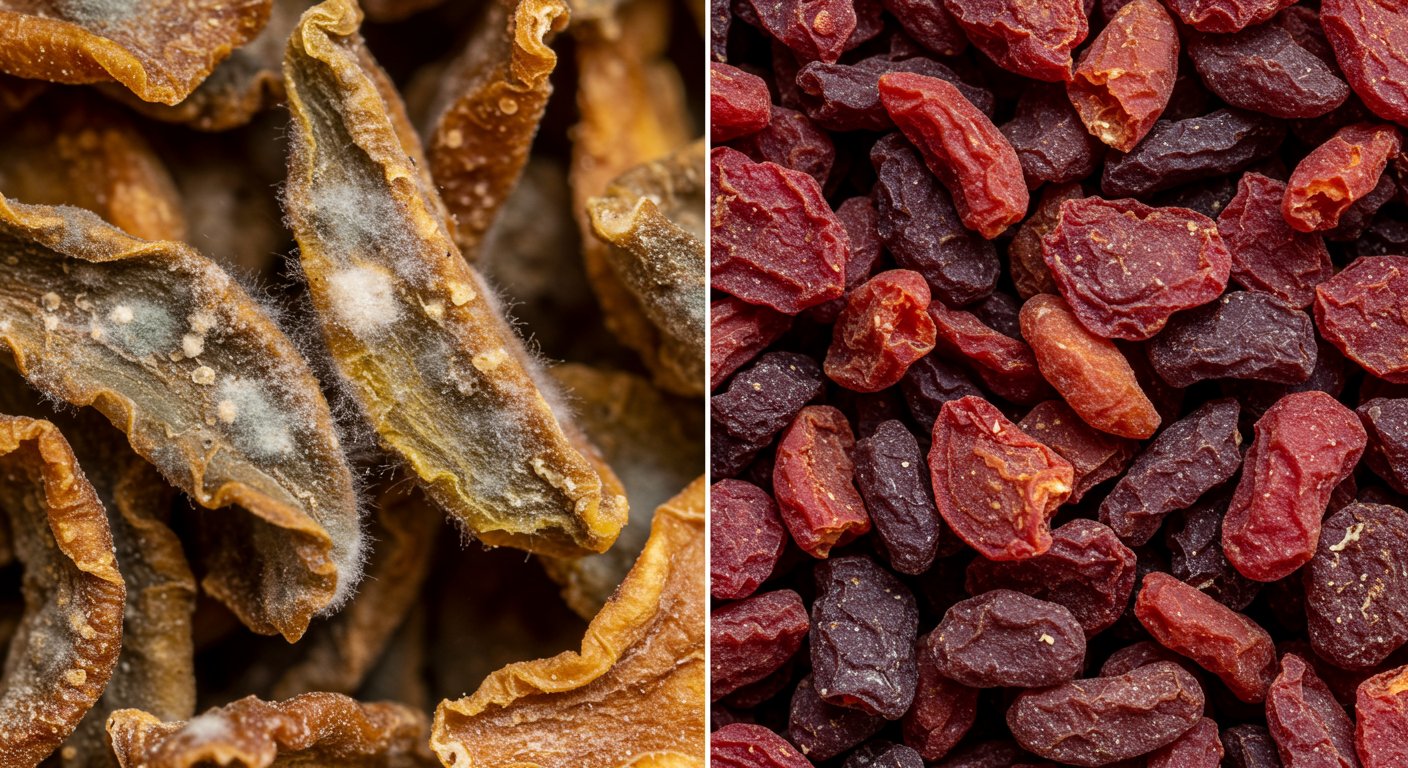 You might wonder why dried vegetables get moldy even though their moisture has been removed. The secret lies in "residual moisture" and "storage environment."
3 Causes of Moldy Dried Vegetables and How to Identify Them
First, let's understand the causes of moldy dried vegetables.
The main causes of moldy dried vegetables are "insufficient drying," "moisture inside the storage container," and "condensation due to temperature changes." Particular caution is needed during periods of high humidity, such as the rainy season or summer. In high-humidity environments, like near rivers, the floor can even get wet. In such environments, dried vegetables also absorb moisture.
You can check if dried vegetables have mold by their appearance and smell. If you see white, green, or black spots, or if you smell a musty odor, it's unfortunately a sign that mold has developed.
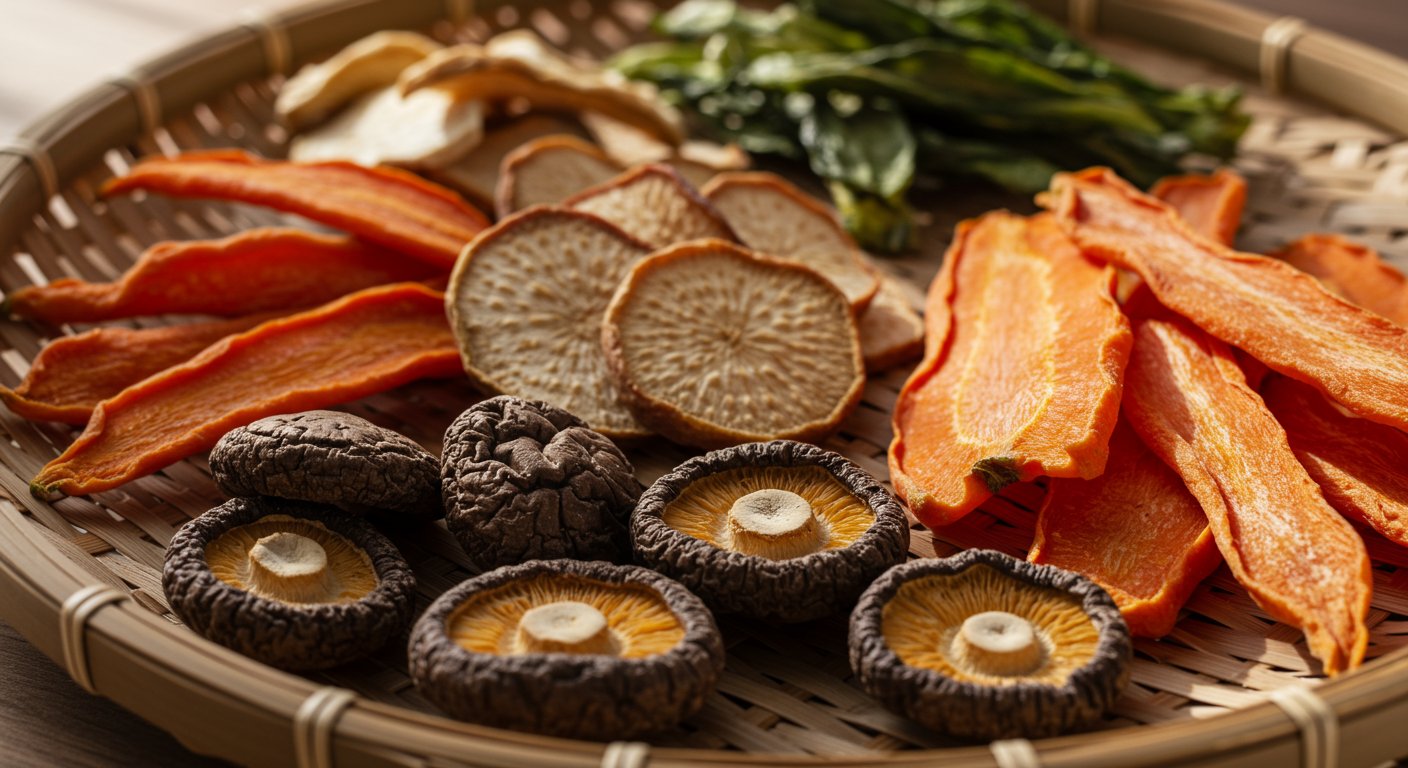 Are black spots on carrots okay?
A slight concern is the black spots that appear on dried carrots. This is actually not mold, but a common phenomenon that occurs when carrots are dried. If it's just black spots, it's fine to eat them without worry.
However, if there's clear fluffy white mold or a strong musty smell, it's best to dispose of them. Food safety is paramount, after all.
Semi-dried is a breeding ground for mold
When making dried vegetables, it's dangerous to store them in a semi-dried state without completely drying them. If moisture remains, it becomes a nutrient source for mold.
Completely dried items like shiitake mushrooms won't get moldy if stored in sealed jars on the kitchen counter. However, semi-dried items are more prone to mold.
How dry should they be?
The ideal state is when they feel crispy to the touch and have almost no elasticity. The degree of dryness varies depending on the type of vegetable, but it's important that the moisture is thoroughly removed.
Pro-Tips! 6 Perfect Storage Techniques for Dried Vegetables
Now for the main topic. Here are 6 storage techniques to prevent your dried vegetables from getting moldy.
7 Essential Tips for Beginners to Avoid Failure and Basic Preparation Methods
① Thorough drying is the absolute basic
First and foremost, dry them thoroughly. This is the most important thing. After washing and cutting vegetables, wipe off any excess moisture thoroughly with kitchen paper.
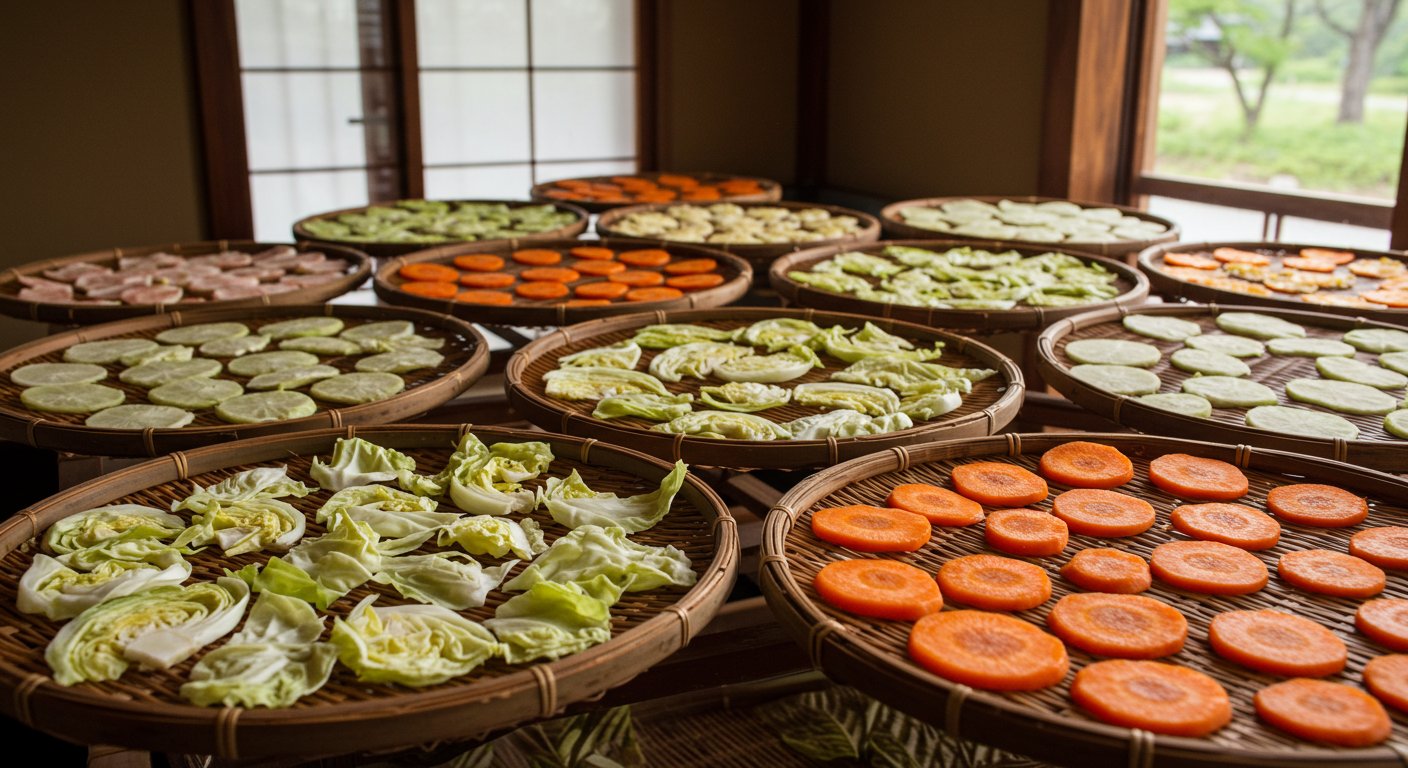
When drying, place them in a well-ventilated area, making sure the vegetables do not overlap. When sun-drying, a well-ventilated shaded area is more ideal than a place with direct sunlight. The drying time varies depending on the type of vegetable, but it's best to dry them until the surface is crispy and feels firm to the touch.
 ② The balance of airtightness and ventilation is key
For storing dried vegetables, the balance between airtightness and ventilation is crucial. Once thoroughly dried, dried vegetables should be placed in a zippered plastic bag or similar, with as much air removed as possible to create an airtight seal.
At this time, it's effective to include a food-grade desiccant in the bag. By removing air and sealing it, you can minimize the oxygen available for mold and other microorganisms.
However, if they are not completely dry, it's safer to store them in breathable paper bags or wooden boxes. Especially with homemade dried vegetables, there tend to be inconsistencies in dryness, so sealing them can sometimes be counterproductive.
③ Choose storage location based on season and frequency of use
The key to choosing a storage location is to select it based on the season and frequency of use.
During low humidity seasons like winter, or for frequently used dried vegetables, room temperature storage is fine. However, during high humidity seasons like summer or the rainy season, refrigerator storage is recommended. If you use them infrequently, freezing is also an option. Freezing allows for long-term storage without worrying about mold.
What about the environment where you live? If you live in a high-humidity area, be especially careful during the rainy season.
④ Preserve freshness by storing in small portions
If you've made a large quantity of dried vegetables, it's recommended to store them in small, individual portions. This allows you to take out only the amount you need, minimizing the time the remaining dried vegetables are exposed to moisture.
Store the portioned dried vegetables in separate airtight containers or bags. By keeping some in the refrigerator and the rest in the freezer, you can enjoy them deliciously for a longer period.
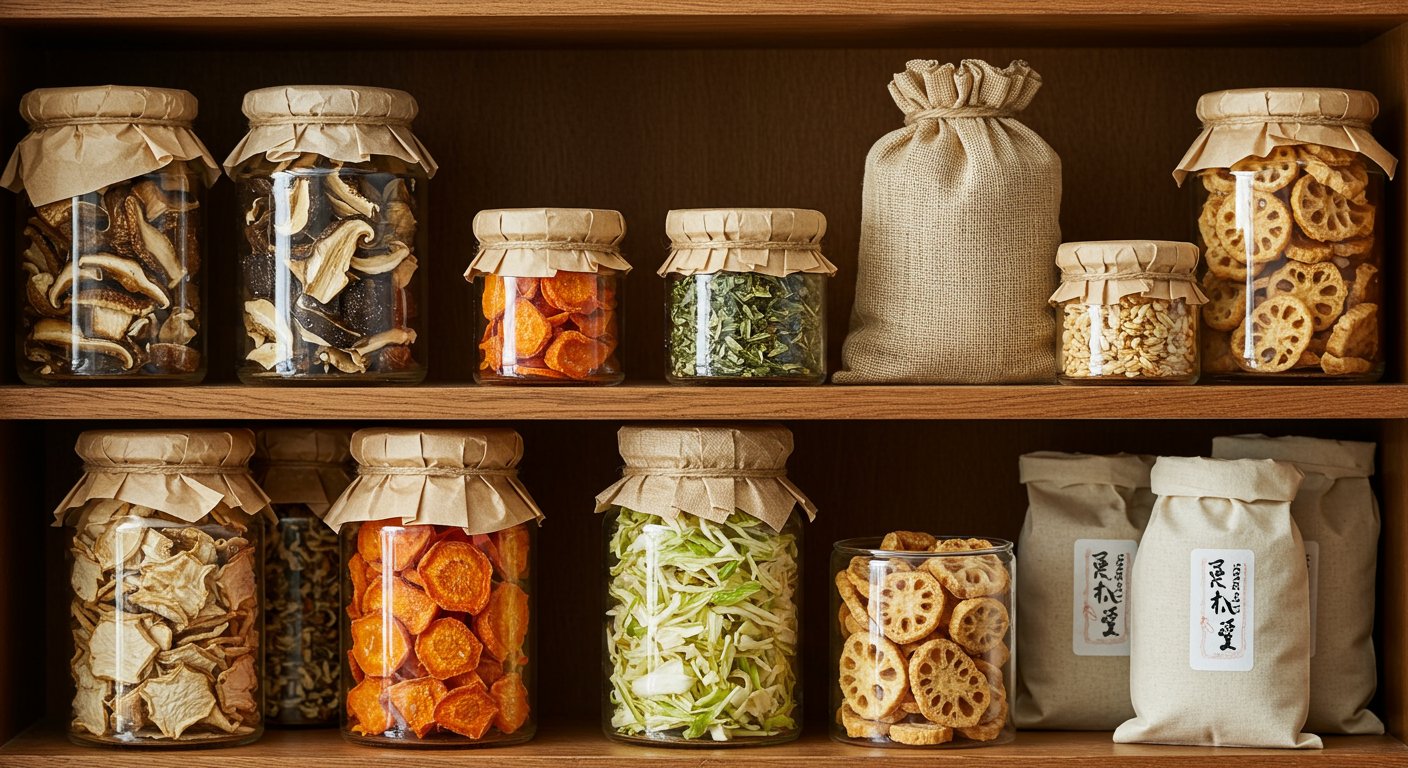 ⑤ Preventing condensation is key to long-term storage
Even if they are completely dry, temperature differences can cause condensation, leading to mold. Be especially careful when moving items in and out of the refrigerator. When taking dried vegetables out of the refrigerator, do not open them immediately; let them return to room temperature first. This will prevent moisture from condensation.
Also, placing a desiccant in the storage container is effective. But remember to use food-grade desiccants.
⑥ Utilize a dedicated dehumidifying case
Especially in high-humidity environments, using a dehumidifying case or cabinet designed for cameras or photos can be a good option.
These have functions to maintain a constant humidity level, making them suitable for storing dried vegetables. They are more effective for moisture control than plastic cases, so if you live in a high-humidity area, you might consider them.
Optimal Storage Methods for Different Types of Dried Vegetables
The optimal storage method varies slightly depending on the type of dried vegetable. Here are some tips for storing common dried vegetables.
Mushrooms (Shiitake, etc.)
Mushrooms are relatively less prone to mold. If thoroughly dried, they can be stored at room temperature in airtight jars. However, during humid seasons, refrigeration is recommended.
Shiitake mushrooms are convenient to dry whole or sliced after removing the stems. Even half a day of drying significantly shrinks them, and they become moist to the touch. Freezing them in this state will prolong their shelf life.
Root Vegetables (Daikon Radish, Carrots, etc.)
For root vegetables like daikon radish and carrots, it's recommended to dry them with the skin on. The skin is rich in nutrients, and drying also concentrates their umami. It's convenient to cut them into shapes easy for cooking, such as round slices or juliennes, before drying. Even half a day of drying will noticeably shrink them and give them a pliable texture.
Carrots may develop black spots when dried, but this is a natural phenomenon, so there's no need to worry. It's not mold, so you can safely eat them.
Leafy Vegetables (Cabbage, etc.)
Leafy vegetables like cabbage contain a lot of moisture, so thorough drying is especially important. Slice them thinly and arrange them so they don't overlap when drying.
Once completely dry, it's best to store them in an airtight container in the refrigerator. If you don't use them frequently, freezing is also an effective storage method.
Leafy vegetables are particularly prone to absorbing moisture, so when taking them out, only take the amount you need and return the rest promptly.
Common Dried Vegetable Storage Mistakes and Solutions
Finally, we'll discuss common mistakes in dried vegetable storage and their solutions.
Mistake: "Sealing in plastic bags when not sufficiently dry"
This is the most common mistake. Sealing semi-dried vegetables in plastic bags creates a humid environment inside the bag, which becomes a breeding ground for mold.
The solution is to dry them thoroughly. And since homemade dried vegetables can have inconsistent dryness, storage in breathable paper bags or wooden boxes is recommended.
Mistake: "Not considering the season for storage"
Using the same storage method all year round can lead to mold depending on the season. Especially during the rainy season and summer, humidity is high, so caution is needed.
The solution is to choose a storage method appropriate for the season. During humid periods, refrigerate as a general rule, and for especially important dried vegetables, freezing is recommended.
Dried vegetables are wonderful ingredients that not only allow for long-term storage but also enhance their nutritional value and umami. Please utilize the storage techniques introduced in this article to enjoy delicious dried vegetables without worrying about mold.
Related Products
Learn More About Dried Vegetables
- 5 Easy Steps to Make Dried Vegetables
- How to Rehydrate Dried Vegetables | 10 Minutes to Restore Plumpness and Umami
- How to Store Dried Vegetables and Their Shelf Life
- Miso Soup Transformed with Dried Vegetables! The Ultimate Ingredient with Concentrated Umami
- 7 Exquisite Soup Recipes Made with Dried Vegetables
そのほかの乾燥野菜ブログ
View all