
Friendly agriculture, Ethie Agricultural Products

The Future of Agriculture

Echie Nosan's Gentle Challenge.
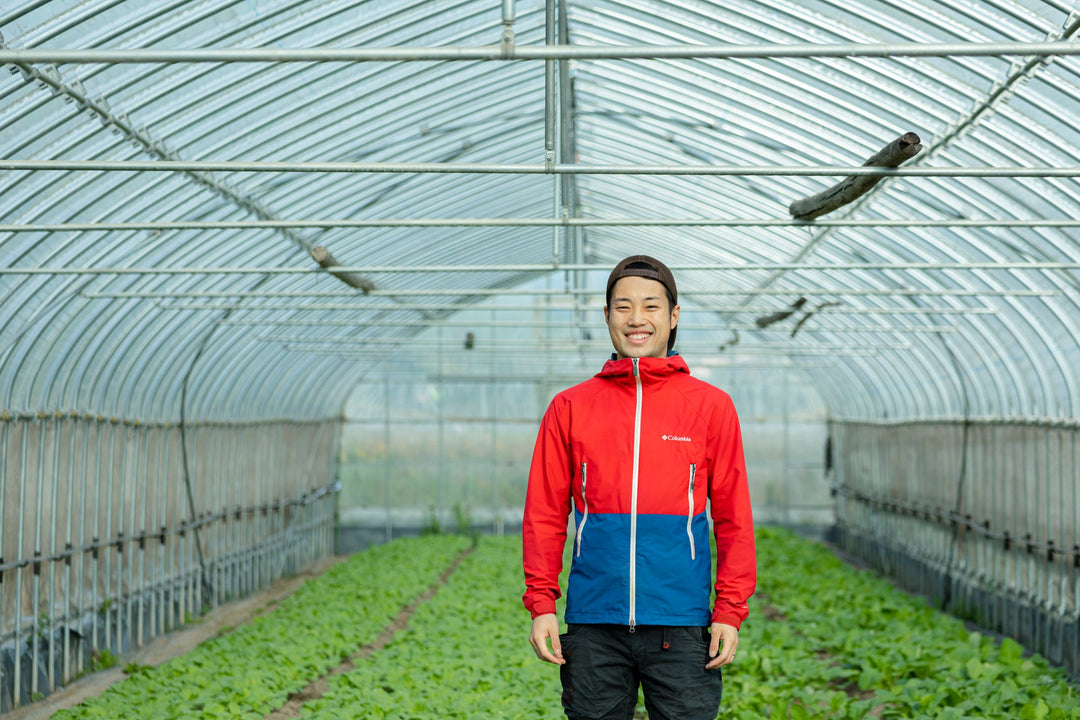
Echie Nosan, Kumihama, Kyotango City
After farming tobacco, Echie Nosan established a company in 2007 with the goal of farming in an environmentally and people-friendly way. Since 2011, they have been dedicated to growing organic JAS-certified rice and vegetables. While their son, Akio Echie (45), has taken over the business, chairman Masao (71) and his wife Toshie (71) are still actively involved in shaping the new form of agriculture.

Commitment to pesticide-free and organic materials
"At first, tobacco cultivation was our main focus," Chairman Masao said, explaining the origins of Echie Nosan, which frankly surprised me. That's because Echie Nosan has a strong image as a farmer committed to pesticide-free and organic materials. The reason he quit tobacco farming after 10 years and began aiming for safe and secure agriculture was a small incident, but considering "the future of agriculture," it was significant, and that surprised me again.

"I heard it at the dentist's office. That permanent teeth don't grow in due to herbicides. I didn't want to use pesticides for the sake of my children and grandchildren," he said.
In 2004, he acquired Eco Farmer certification, a system that recognizes farmers who practice environmentally friendly agriculture by using compost to create soil and minimizing the use of pesticides and chemical fertilizers. The Echie family has passed down their rice paddies for generations, and they utilize compost unique to rice farmers. "In addition to homemade rice hull compost, we pelletize rice bran produced during milling and spread it on the rice paddies and fields that produce Organic JAS-certified crops to enrich the soil."

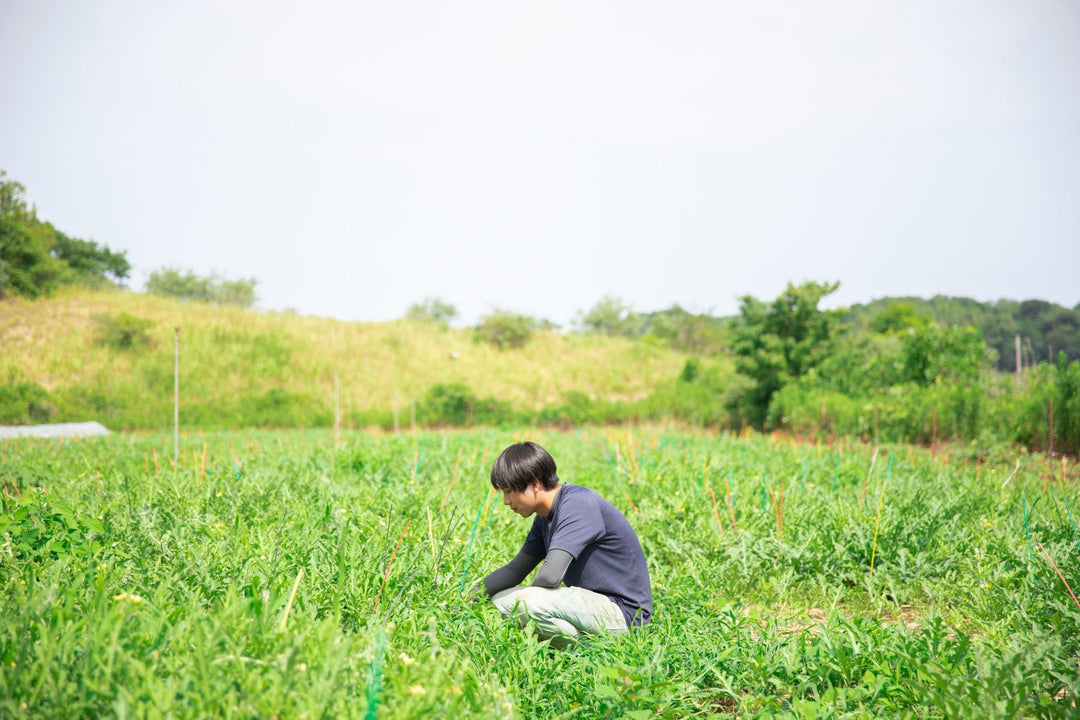
With 23 hectares of rice paddies and 7 hectares of fields, the scale is vast, equivalent to 6.5 Tokyo Domes. We hopped into a light truck and were driven to the fields where carrots and onions are organically grown on the innermost mountain slopes. The mountainsides visible around the fields were red, and the soil itself, a hard, red clay-like soil with little organic matter. Yet, the soil in the fields was soft and springy underfoot, and even the carrot leaves looked lush and tender.

Suddenly, my eyes caught a red dragonfly resting on a "Beni Kururi" daikon radish leaf, and a question arose: with pesticide-free organic cultivation, what about insects? The answer was "Lots of them! (laughs)" from Masao. Leafy greens in summer are a favorite of insects. So, in summer, they don't grow leafy greens, aiming for coexistence with nature.

From colorful carrots to salad turnips.
Echie Nosan's environmentally and people-friendly vegetable cultivation began with growing daikon radishes. Currently, they cultivate about 30 varieties of pesticide-free vegetables annually, mainly root vegetables.
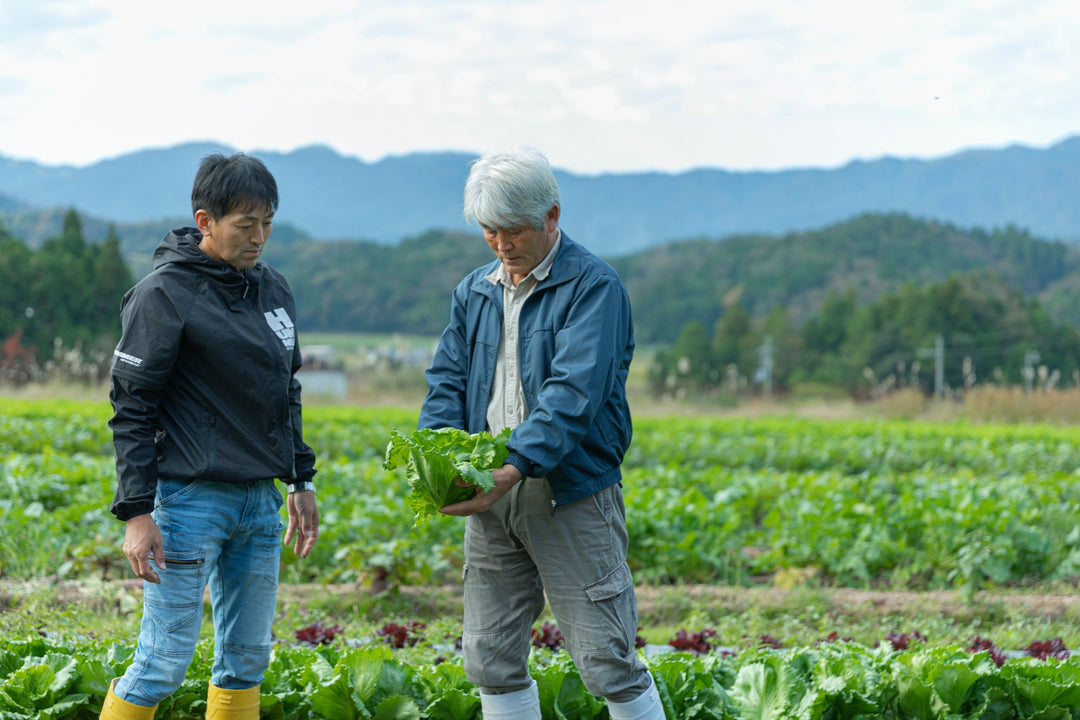
"If you use pesticides or chemical fertilizers, it often affects the leaves," says Akio, the representative. He says that when people who know organic vegetables visit, they are all impressed by tasting the leaves first. This was symbolized visually in the carrot field. The field, with its vivid light green leaves, typical of naturally grown organic carrots, looked like a forest or grassland scene from a movie.

Carrots vary in color and flavor depending on the variety. The dark red Kyo-Kurenai becomes sweeter with each bite, while the orange Oranje is refreshingly sweet and fragrant. I heard that recently they have also started growing colorful and rare varieties of carrots, such as purple and cream-colored ones.
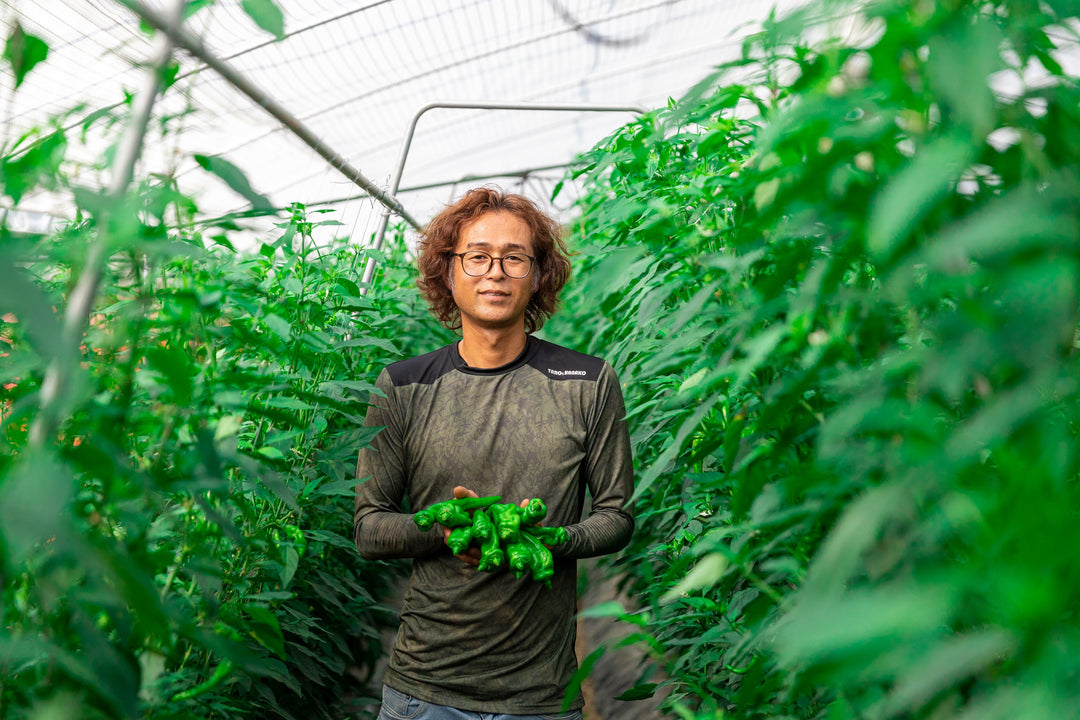
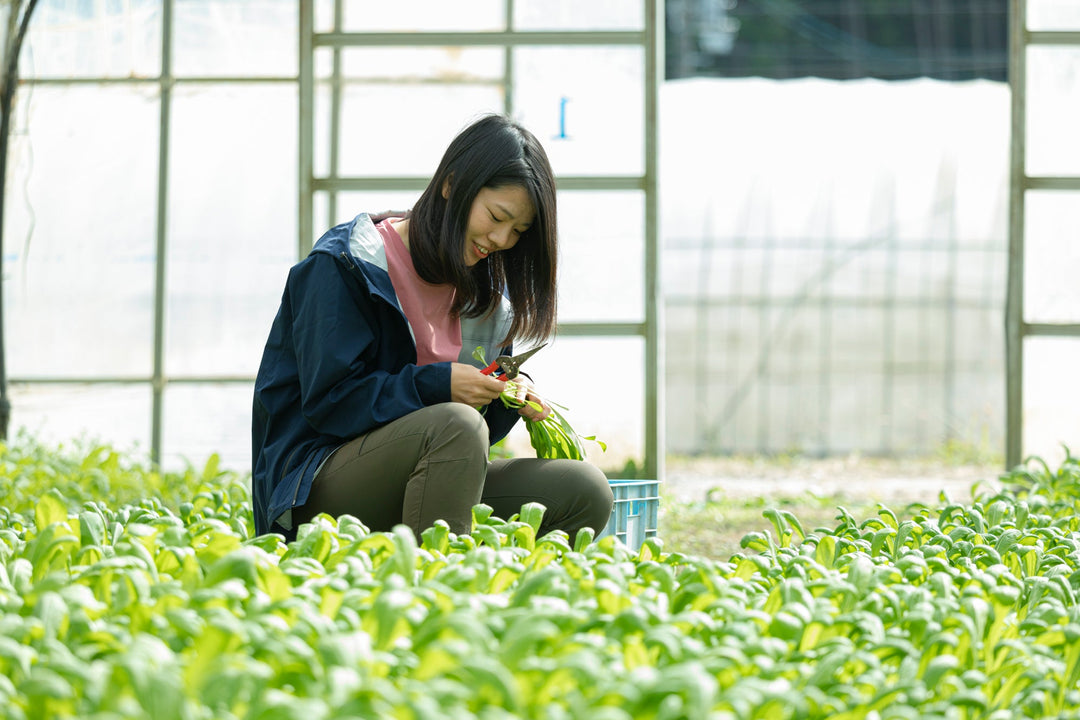
"I'm obsessed with colorful vegetables, and I'm growing Swiss chard and mustard greens in the greenhouse," said Akio, his face bright. He seemed to be enjoying farming, challenging new vegetables and increasing the number of cultivated varieties. In autumn, a wide variety of vegetables are harvested, along with colorful carrots.

"Did you wash them with water?" people often ask. The taro, carefully hand-cleaned of soil, is so pristine it can be steamed as is. Its chewy texture and deliciousness with just a pinch of salt are also highly praised. The fresh ginger, which wafted a refreshing aroma the moment it was unearthed, was plump and firm with a healthy sheen after lightly shaking off the soil, which Masao vouched for as "a good one this year." Not only was its aroma excellent, but its juiciness and tenderness were also clear even to an amateur eye.


I also sampled a red turnip called "Momonosuke," which can be eaten in salads. Its crisp, juicy, and tender texture, similar to a peach, and its subtle sweetness, like fruit, impressed me just as much as the people who tasted the leaves. A smile naturally spread across my face, just like Akio, who seems to be enjoying "the future of agriculture."
Drying, or making powders.
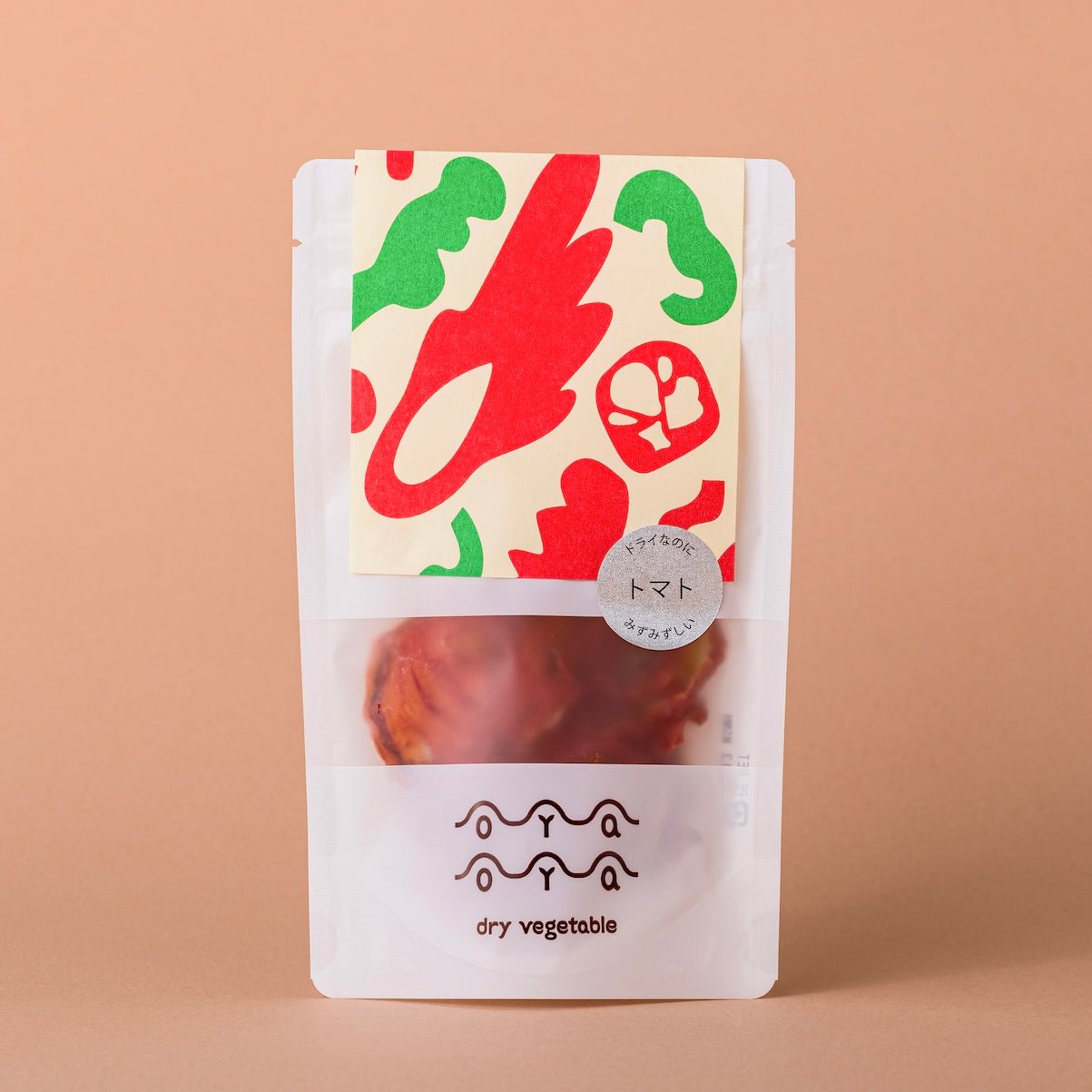
Under the leadership of Toshie, his wife, Echie Nosan is also involved in a processing business that transforms irregularly shaped vegetables into dried vegetables and powders, ensuring that the carefully cultivated crops are not wasted. The beginning of this venture, much like the start of their vegetable cultivation with daikon radishes, was apparently dried daikon. From dried daikon to dried onions and ginger powder, they have gradually developed products, and the current lineup of processed goods includes about 20 types of dried vegetables and powders.

"Freshness is crucial for dried vegetables, too," says Toshie, and true to her words, Echie Nosan's dried vegetables are flavorful, aromatic, and beautifully colored because their ingredients are fresh.
"We've made efforts to change the cutting method and thickness to bring out beautiful colors." With the exception of vegetable slicing and drying processes using both kerosene and electricity, most of the processes, such as vegetable cutting, are done by hand, similar to farm work.

In addition to vegetables, they also process rice flour for local bakeries and confectionery companies that make traditional Kyoto sweets. Furthermore, while cultivating Organic JAS-certified Tango Koshihikari rice, they also produce processed rice for miso and use broken rice as an ingredient for rice vinegar, leaving no stone unturned in reducing food loss related to rice farming.
We learned about their dedication and passion while being shown the mountain of rice hulls piled almost to the ceiling of the warehouse, which will become homemade compost, and the composting area where earthworms were already at work. We smelled the natural aroma of the vegetables grown organically, tasted them fresh on the spot, and experienced firsthand this new form of agriculture that handles everything from soil preparation to crop processing.

Photo by:Takashi Kuroyanagi
Writer:socko
Farmer:Echie Nosan


Produced by OYAOYA
Related Products
生産者の記事